 Nocturne Gallery
Ernest Hoschedé: The Collector Who Bought Monet’s Impression, Sunrise in 1874
Hoschedé usually appears in histories of Impressionism as a footnote: the owner of one famous painting, or the husband of Alice Hoschedé. This article follows what the documents say about him: what he bought, what he commissioned, how his collection was lost, and what remains unknown. It is a companion to an episode of Nocturne After Hours.
Who was Ernest Hoschedé?
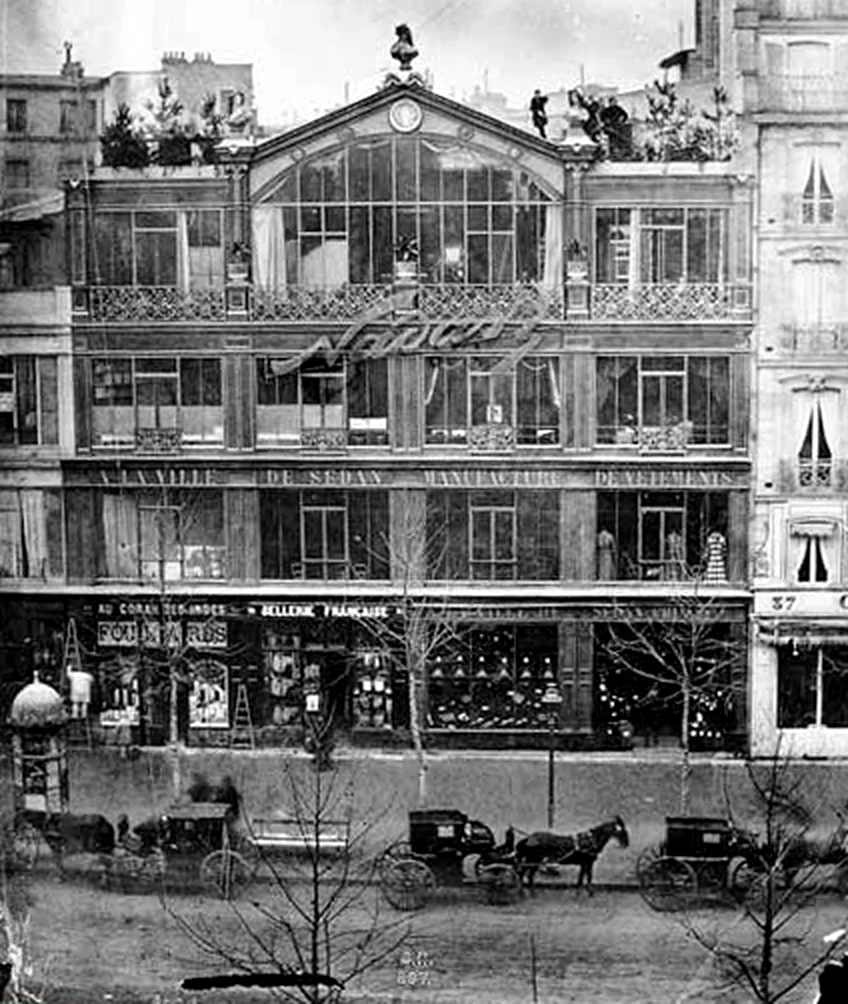
Hoschedé was the director of a Paris department store, an occasional art critic and an enthusiastic collector.8 He bought contemporary painting when the Impressionist group had little commercial market. His acquisitions from Monet, which began no later than 1874, are the best documented part of his collecting.
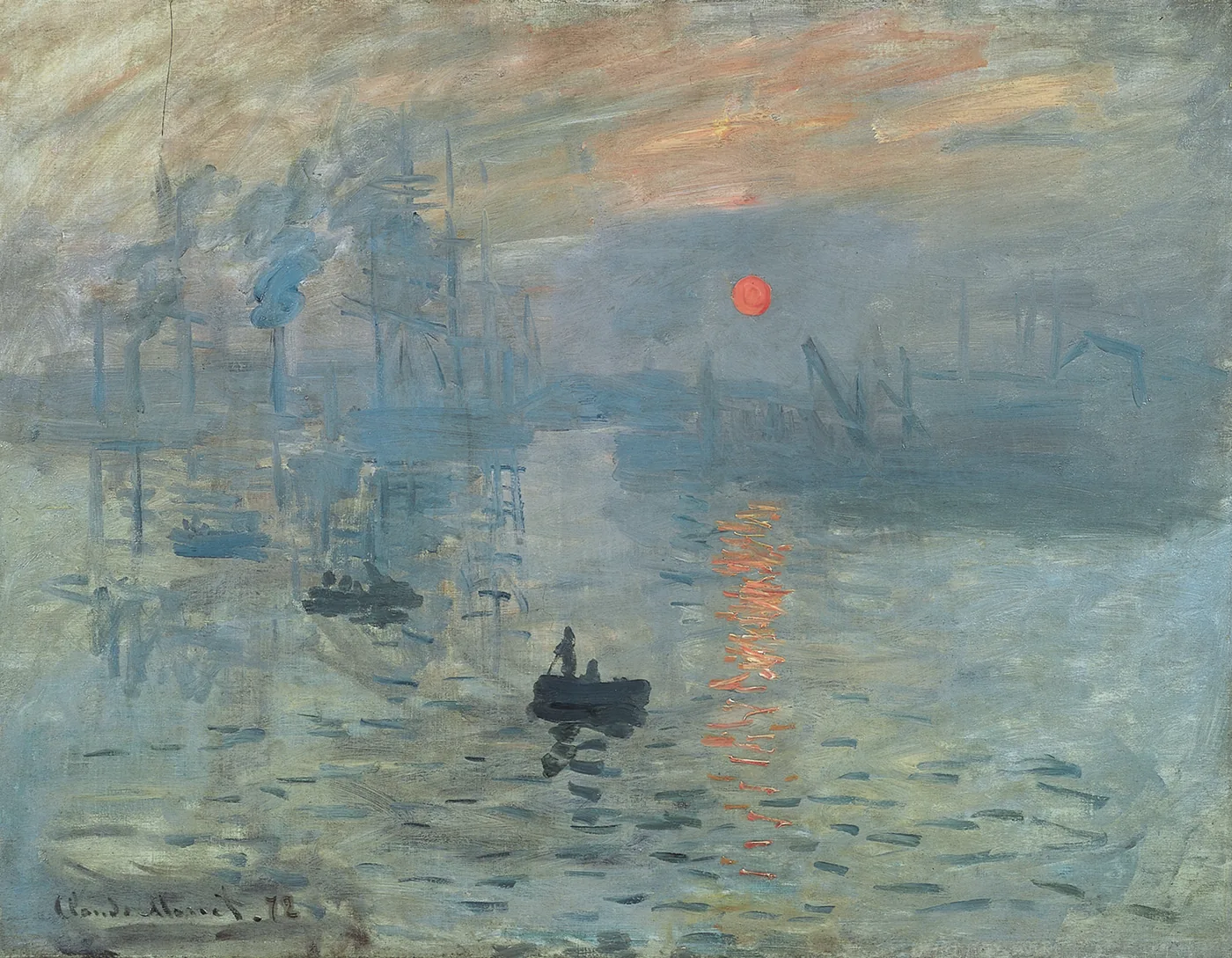
The acquisition of Impression, Sunrise, 1874
The group’s first exhibition opened in Paris in April 1874. According to the Musée Marmottan Monet, which owns the painting, Hoschedé acquired it in May of that year for 800 francs.1 The museum’s record gives the date and price but does not describe the circumstances of the sale.
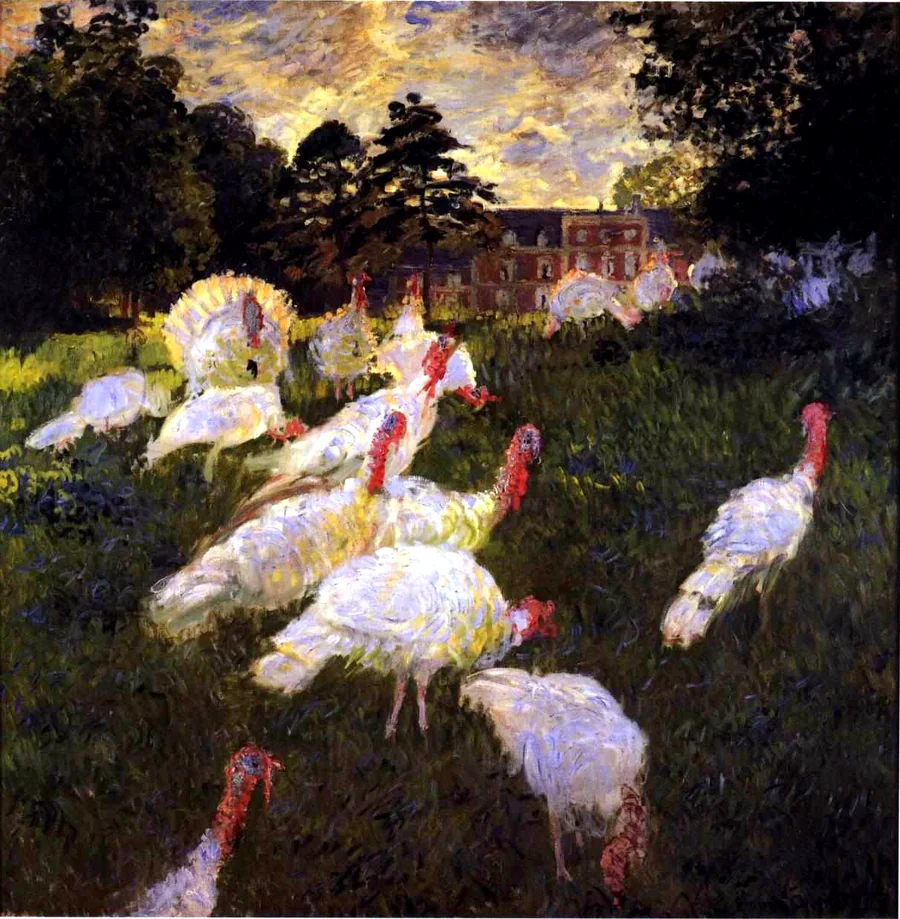
The Rottembourg commission, 1876
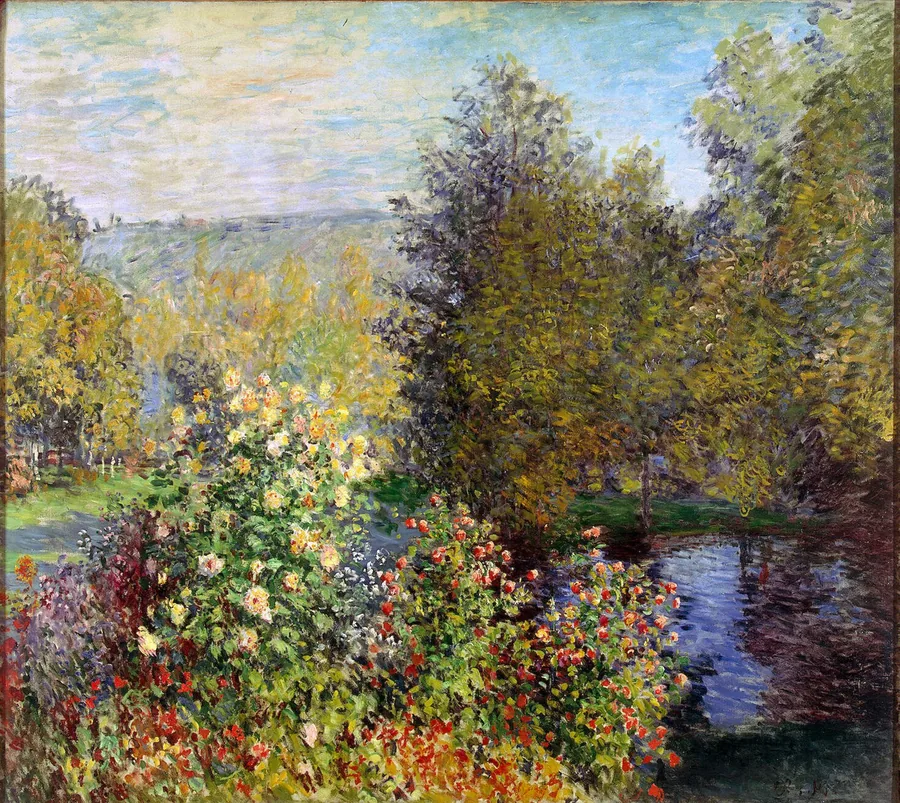
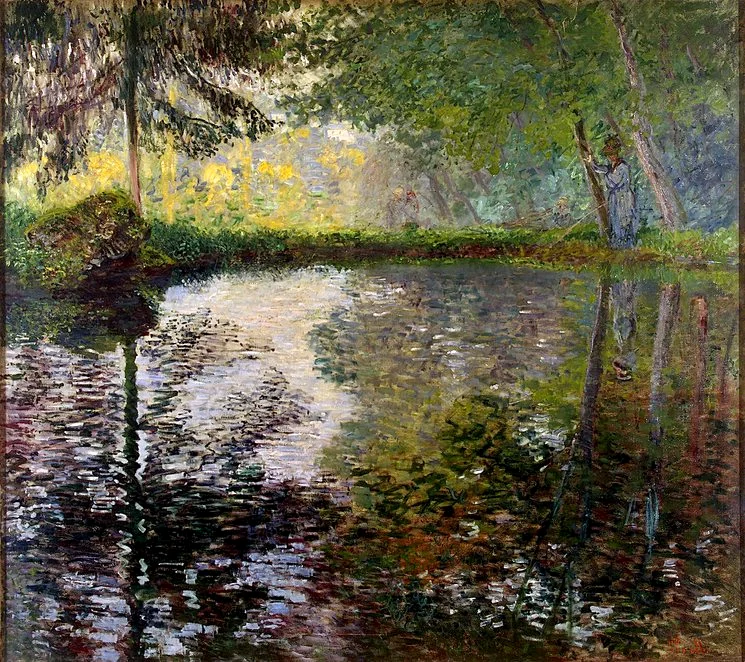
In 1876 Hoschedé commissioned Monet to paint decorative panels for the round drawing room of his château at Montgeron, the Château de Rottembourg. Wildenstein’s catalogue raisonné records four panels, among them Les Dindons (Musée d’Orsay, W416) and two views of the Montgeron grounds now in the State Hermitage Museum, Coin de jardin à Montgeron (W418) and L’Étang à Montgeron (W420).3 The panels never reached Rottembourg. Hoschedé went bankrupt the following year, and the canvases were later dispersed.3

Bankruptcy and the sale of 1878
Hoschedé’s bankruptcy in 1877 led to the court-ordered sale of his collection at the Hôtel Drouot in June 1878. Lot 55 was Impression, soleil levant, listed under the wrong title L’Impression, soleil couchant. Dr Georges de Bellio bought it for 210 francs, a little over a quarter of what Hoschedé had paid four years earlier.1,2
De Bellio was himself an early supporter of Monet and had been buying from the artist since 1876.2 The Marmottan describes the sale as passing in general indifference, and the painting did not take its present title until 1965.1 A forced sale of a bankrupt estate is a particular kind of price, so the 210 francs is evidence about that sale, not a simple measure of what the painting was worth.
The Hoschedé–Monet household
Alice Hoschedé and her six children moved to Vétheuil to live alongside Monet, his wife Camille and their two sons. One auction-house biography dates the move to the summer of 1878.4 Camille Monet died in September 1879, aged thirty-two. The combined household moved to Poissy in 1881 and to Giverny in 1883.4 Alice did not return to her husband and remained with Monet.
Death and funeral, 1891
Ernest Hoschedé died in Paris in March 1891. The civil death record, registered in the ninth arrondissement, is dated 19 March.5 The funeral and burial took place at Giverny at the request of his children, and Monet paid for them. Alice Hoschedé and Monet married in July 1892.7
What is genuinely uncertain
Paternity of Jean-Pierre Hoschedé. Jean-Pierre, Alice’s youngest son, was born in 1877, and Ernest Hoschedé is recorded as his father. A phrase in Monet’s correspondence, “our two little ones”, is reported to refer to Jean-Pierre and Monet’s son Michel together, and has been read as a hint about paternity. This article has not traced the original letter, and none of the sources reviewed for it settles the question.
Date of death. The civil record is dated 19 March 1891, while the Bibliothèque nationale de France authority record gives 18 March.5,6 A registration date and a date of death can differ, so this article gives only the month.
Why he matters
Two things in the record are well supported. Hoschedé bought and commissioned Monet’s work when few others did, and the painting that later lent the movement its name passed through his bankruptcy sale for 210 francs. Marmottan notes that only two private collections ever held it, his and de Bellio’s.1 His story shows how thin the early market for Impressionism still was.
Chronology
| April 1874 | First group exhibition, Paris. |
| May 1874 | Hoschedé acquires Impression, soleil levant for 800 francs. |
| 1876 | Hoschedé commissions Monet’s four decorative panels for Rottembourg. |
| 1877 | Hoschedé’s bankruptcy. |
| June 1878 | Court-ordered sale at the Hôtel Drouot; lot 55 sold to de Bellio for 210 francs. |
| Summer 1878 | Alice Hoschedé and her children at Vétheuil with the Monets. |
| September 1879 | Death of Camille Monet. |
| 1881, 1883 | The combined household moves to Poissy, then Giverny. |
| March 1891 | Death of Ernest Hoschedé in Paris; funeral at Giverny, paid for by Monet. |
| July 1892 | Marriage of Alice Hoschedé and Claude Monet. |
Sources and method
This article separates documented provenance, archival records, published scholarship and later interpretation. Where sources disagree or the evidence runs out, it says so. The full method is on the fact-checking page. Found an error? Write to nocturnegallery.partners@gmail.com.
Notes
- Musée Marmottan Monet, exhibition text “Impression, soleil levant: l’histoire vraie du chef-d’œuvre de Claude Monet”, as reproduced on ArtRabbit, accessed 2026-10-08 (May 1874, 800 francs; 1878 sale, 210 francs, wrong title; retitled 1965; two private collections).
- Musée Marmottan Monet, provenance record of Impression, soleil levant (lot 55, de Bellio, buying from Monet since 1876).
- Daniel Wildenstein, Claude Monet: Biographie et catalogue raisonné (W416, W418, W420); State Hermitage Museum catalogue entries.
- The Metropolitan Museum of Art, Monet’s Years at Giverny: Beyond Impressionism; for the summer 1878 date, Artcurial lot note, accessed 2026-10-08.
- Archives de Paris, death record no. 472, 19 March 1891, 9th arrondissement, cote V4E 6257.
- Bibliothèque nationale de France, authority record for Ernest Hoschedé (1837–1891), accessed 2026-10-08.
- Mary McAuliffe, Dawn of the Belle Époque (Rowman & Littlefield, 2011), p. 212; Terry W. Strieter, Nineteenth-Century European Art: A Topical Dictionary (Greenwood, 1999), pp. 103–104.
- Matthiesen Gallery, catalogue note on Carolus-Duran’s portrait of Alice Hoschedé, accessed 2026-10-08.